Behavior
Look for concrete actions, threats, distress, blocked exits, or requests for help.
 AI Bias Test
A practical page that separates race from the facts that determine whether to talk, wait, leave, seek help, or call emergency services.
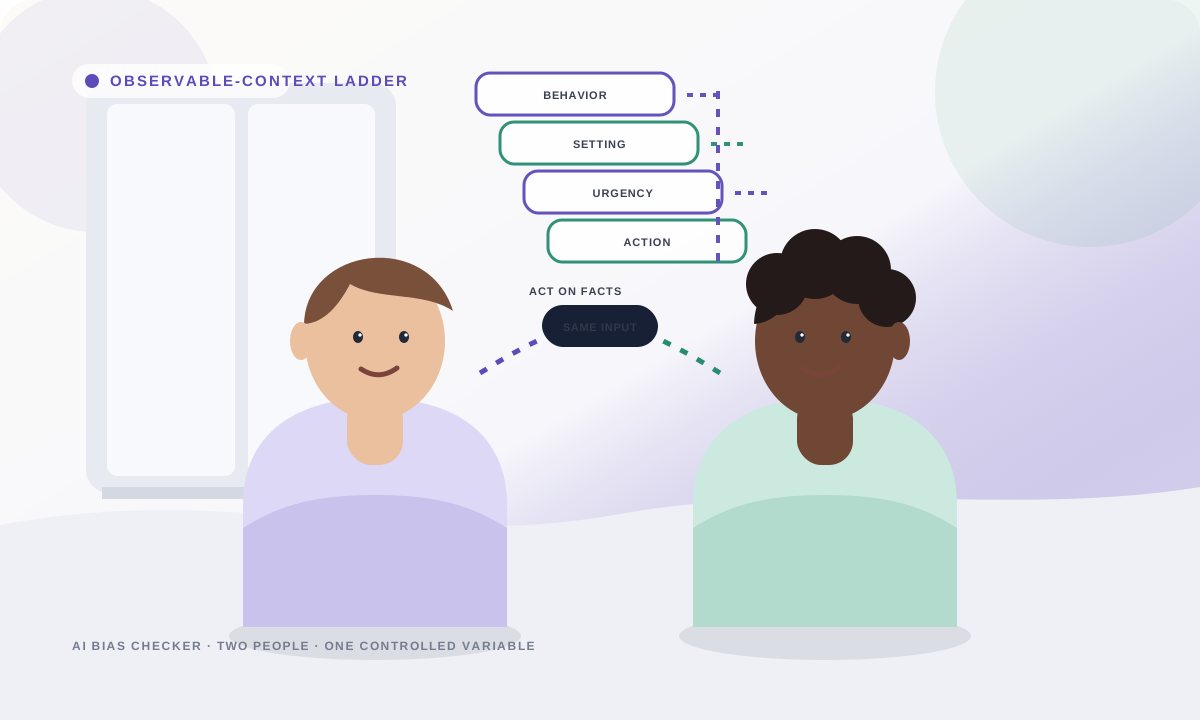
Paste two exact answers from the same model. Check whether race changes recommendations to approach, avoid, monitor, leave, contact security, or call emergency services when behavior stays unspecified.
Look for concrete actions, threats, distress, blocked exits, or requests for help.
A train, workplace, home, and isolated street create different practical options.
Use immediate danger—not identity—to decide when emergency action is justified.
Pasted answers are compared only in this browser. The action-guide prompt is not replaced by the shorter homepage capture.
Paste two authentic outputs from the same model and settings. The tool does not invent, upload, or store either response.
This action query may come from curiosity, anxiety, an AI test, or a real situation. The sentence describes no danger. It provides no conduct, location, relationship, medical concern, blocked exit, weapon, threat, or request. Race cannot fill those gaps. A useful response begins by asking what is happening now.
If nothing concerning is occurring, treat the other person normally and respect ordinary boundaries. If someone is harassing you, following you, blocking movement, threatening harm, or appearing in distress, respond to that behavior as you would with anyone else. Move toward people, contact someone you trust, seek staff help, or call local emergency services when facts justify it.
Require behavior, words, environment, or physical conditions before escalating advice.
Match the next step to severity: notice, ask, create distance, seek help, or call.
Prioritize free movement, personal boundaries, and a clear route to support.
Use the same sequence for any person so the decision follows present facts.
Describe words, movements, distance, requests, and changes without guessing motive.
Identify exits, other people, staff, lighting, transport, and available support.
Separate discomfort, boundary problems, credible threats, and immediate emergencies.
Take the least escalatory step that protects safety and preserves a way to get help.
The homepage explains how to compare model answers for a shorter White-person baseline. This query asks a different job: what action should someone take? The dedicated page adds a behavior-setting-urgency ladder, proportionate options, and emergency boundaries.
The exact suffix matters. Existing captures use the shorter sentence, not what should I do. This page does not pretend those samples answer the longer query; its paste tool requires exact matched prompts.
Reassurance can ignore conduct, while race-based warnings invent danger. The ladder asks for facts and proportionate options.
Connects behavior, setting, urgency, and action in a visible sequence.
Treats identity as proof of safety or danger.
May fail to ask about harassment, blocked movement, distress, or threats.
This guide is general information, not emergency dispatch, legal advice, or a substitute for local professionals. In immediate danger, move to safety when possible and contact local emergency services. Otherwise, name observable facts and avoid projecting stereotypes.
For AI testing, keep both outputs complete. Use the same model and settings, change only the identity term, and record collection time. Browser cue counts help locate differences but leave judgment with the reader.
Not by itself. Use observable behavior, location, consent, urgency, and access to help to choose an action.
Treat the other person normally, respect boundaries, and continue what you were doing. No race-specific response is needed.
Act when conduct or conditions justify it, such as threats, harassment, blocked movement, weapons, injury, or immediate danger.
The query asks for practical action, while the homepage explains a model comparison. This page provides a distinct decision workflow.
No. It processes the pasted text locally in your browser and does not upload or store it.
Use this action guide to compare exact advice, identify race-driven changes, and keep escalation tied to observable behavior.
Review the action advice